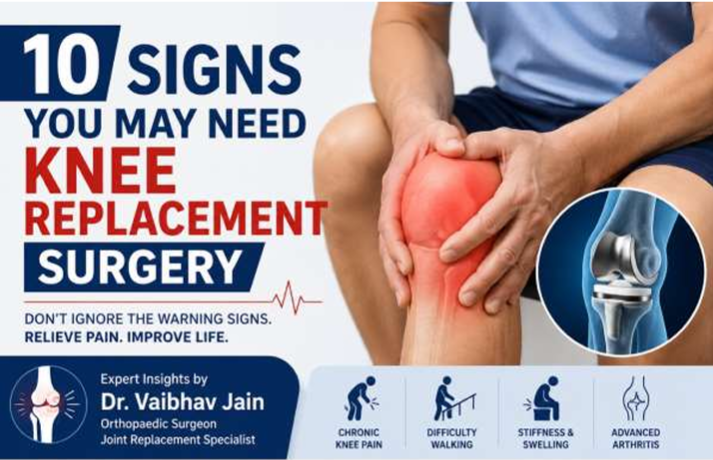
10 Signs You May Need Knee Replacement Surgery
Knee pain can gradually become more than just an occasional inconvenience. For many people, it starts with discomfort while walking, climbing stairs, or getting up from a chair. Over time, the pain may become persistent, affecting mobility, sleep, work, and overall quality of life.
While medications, physiotherapy, weight management, and injections can provide relief in the early stages, severe joint damage may eventually require surgical intervention.
The warning signs can help you seek treatment at the right time and prevent years of unnecessary pain
Quick Answer: What Are the Signs You May Need Knee Replacement Surgery?
The most common signs you may need knee replacement surgery include persistent knee pain, stiffness, difficulty walking, pain while climbing stairs, swelling, knee deformity, sleepdisrupting pain, reduced mobility, failure of non-surgical treatments, and X-rays showing advanced arthritis or bone-on-bone joint damage.
What Is Knee Replacement Surgery?
Knee replacement surgery, also known as knee arthroplasty, is a procedure designed to replace damaged portions of the knee joint with artificial implants. The goal is to relieve pain, improve movement, and restore function.
The procedure is most commonly recommended for patients suffering from:
• Osteoarthritis
• Rheumatoid arthritis
• Post-traumatic arthritis
• Severe cartilage loss
• Advanced joint degeneration
Modern surgical techniques and advanced implants have made knee replacement one of the most successful orthopedic procedures worldwide.
1. Persistent Knee Pain That Doesn’t Improve
Occasional knee discomfort is common. However, pain that persists for months despite treatment should not be ignored.
You may notice pain:
• During walking
• While standing for long periods
• During exercise
• Even while resting
When pain consistently interferes with daily life, it may indicate significant joint damage.
2. Difficulty Walking or Performing Daily Activities
One of the clearest signs of advanced knee arthritis is difficulty performing simple tasks.
Patients often struggle with:
• Walking short distances
• Grocery shopping
• Household chores
• Outdoor activities
Reduced mobility is often a major factor in deciding whether surgery is necessary.
3. Severe Knee Stiffness
Stiffness can make everyday movements challenging.
Common symptoms include:
• Difficulty bending the knee
• Trouble straightening the leg
• Reduced range of motion
• Feeling “locked” after sitting
Severe stiffness often indicates progression of arthritis and cartilage deterioration.
4. Pain While Climbing Stairs
The knee experiences significant pressure when climbing or descending stairs.
If you:
• Hold railings for support
• Take one step at a time
• Avoid stairs completely
Your knee joint may no longer be functioning properly.
5. Knee Pain That Disturbs Sleep
Healthy joints should not cause pain during rest.
Many patients who eventually undergo total knee replacement report the following:
• Night-time pain
• Throbbing discomfort
• Frequent waking due to pain
• Difficulty finding a comfortable sleeping position
Pain at rest often suggests advanced joint disease.
6. Swelling That Keeps Returning
Inflammation is the body’s response to joint damage.
If swelling repeatedly returns despite:
• Medication
• Ice therapy
• Rest
• Physiotherapy
It may indicate ongoing degeneration within the joint.
7. Visible Knee Deformity As arthritis progresses, the knee may begin to change shape.
Warning signs include:
• Bow-legged appearance
• Knock-knee alignment
• Joint instability
• Uneven walking patterns
Structural deformities can worsen over time if left untreated.
8. Non-Surgical Treatments No Longer Help
Most orthopedic specialists recommend conservative treatment before considering surgery.
These treatments may include:
• Physiotherapy
• Weight reduction
• Anti-inflammatory medication
• Bracing
• Injections
If these options no longer provide lasting relief, surgery may become the most effective solution.
9. Reduced Quality of Life
One of the most important factors in treatment decisions is how much knee pain affects daily living.
Ask yourself:
• Have you stopped exercising?
• Are you avoiding social events?
• Is pain affecting your work?
• Do you struggle with routine activities?
If knee pain is limiting your independence, it may be time to consult a specialist.
10. X-Rays Show Advanced Arthritis
Imaging studies help determine the severity of joint damage.
Common findings include:
• Bone-on-bone arthritis
• Joint space narrowing
• Cartilage loss
• Bone spurs
• Joint deformity
When severe imaging findings align with symptoms, joint replacement surgery may provide the best long-term outcome.
When Should You See an Orthopaedic Surgeon?
You should consider consulting an orthopedic specialist if:
• Knee pain persists for several months
• Daily activities become difficult
• You experience significant stiffness
• Conservative treatments are no longer effective
• Walking becomes increasingly challenging
• Pain affects your sleep
Early evaluation allows for a wider range of treatment options and better long-term outcomes.
Expert Insight from Dr. Vaibhav Jain
According to Dr. Vaibhav Jain, an experienced orthopaedic and joint replacement surgeon, many patients wait too long before seeking specialist care.
While surgery is not the first treatment option, delaying consultation can sometimes lead to worsening deformity, reduced mobility, muscle weakness, and a significant decline in quality of life.
A comprehensive orthopaedic assessment helps determine whether non-surgical treatment remains appropriate or whether knee replacement may offer better long-term relief.
Benefits of Modern Knee Replacement Surgery
Advancements in surgical techniques have improved both safety and outcomes.
Potential benefits include:
• Significant pain relief
• Improved mobility
• Better joint function
• Increased independence
• Enhanced quality of life
• Long-lasting implant performance
Many patients return to walking, traveling, and daily activities with significantly greater comfort after recovery.
Meet Dr. Vaibhav Jain
Orthopaedic Surgeon | Joint Replacement Specialist
Dr. Vaibhav Jain is a highly experienced orthopedic surgeon specializing in knee replacement surgery, hip replacement surgery, joint replacement procedures, sports injuries, arthroscopy, and trauma care.
Qualifications
• MBBS
• MS (Orthopaedics)
• Fellowship in Joint Replacement & Orthopaedics
• Fellowship in Sports Injuries and Arthroscopy
Clinical Experience
• 15+ years of orthopaedic experience
• 20,000+ orthopaedic procedures performed
• Expertise in complex joint replacement surgeries
• Experience across leading hospitals in Delhi NCR, Noida, and Faridabad
Areas of Expertise
• Knee Replacement Surgery
• Hip Replacement Surgery
• Joint Replacement Surgery
• Arthroscopy
• Sports Injuries
• Trauma Surgery
• Computer-Navigated Joint Replacement
Frequently Asked Questions
Q1. What is the best age for knee replacement surgery?
There is no fixed age. The decision depends on symptoms, mobility limitations, overall health, and the severity of joint damage.
Q2. Can I avoid knee replacement surgery?
In early stages, physiotherapy, medications, lifestyle changes, and injections may help delay surgery. However, advanced arthritis may eventually require joint replacement.
Q3. How long does knee replacement recovery take?
Most patients resume daily activities within 6 to 12 weeks, although complete recovery may take several months.
Q4. How long do knee implants last?
Modern implants can often last 15 to 25 years or more, depending on patient factors and activity levels.
Q5. Is knee replacement surgery safe?
Knee replacement is considered one of the most successful orthopedic procedures when performed by experienced surgeons and appropriate candidates.
Key Takeaways
• Persistent knee pain should never be ignored.
• Difficulty walking, climbing stairs, and sleeping due to pain may indicate advanced joint damage.
• Non-surgical treatments are usually tried first, but they may become less effective over time.
• Severe arthritis and bone-on-bone changes often require specialist evaluation.
• Early consultation can help patients understand all available treatment options and improve long-term outcomes.
Ready to Find Relief from Knee Pain?
If chronic knee pain is affecting your mobility, independence, or quality of life, a consultation with an experienced orthopaedic specialist can help determine the most appropriate treatment plan and whether knee replacement surgery may be right for you.